

When an emergency occurs, getting people’s attention quickly can make a significant difference. A Hand Operated Siren offers a simple and dependable way to create an audible warning without relying on electricity, batteries, or complex control systems. These sirens can be useful in factories, workshops, schools, construction areas, warehouses, community facilities, and locations where backup warning equipment is needed.
However, choosing the right model requires more than simply looking for the loudest option. Factors such as sound output, construction, operating mechanism, portability, environment, coverage area, and applicable standards all matter. Understanding these factors can help you select a siren that performs reliably when it is needed most.
What Is a Hand Operated Siren?
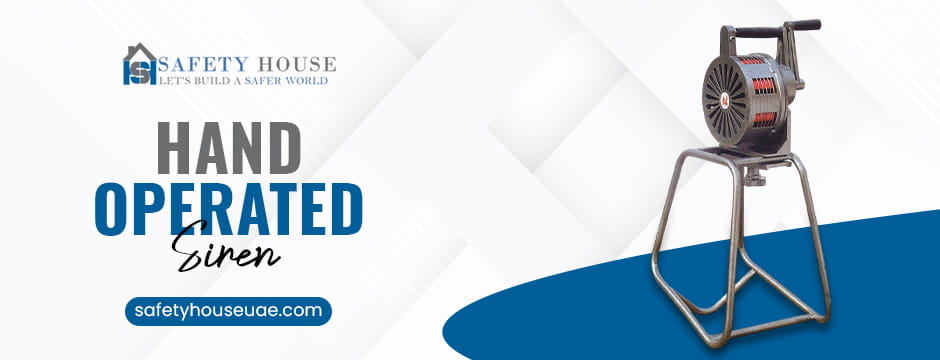
A hand-operated siren is a manually powered warning device that produces a loud audible signal when its operating handle or crank is turned. Unlike electrically powered sirens, it does not depend on an external power supply. This makes it particularly useful in locations where electrical infrastructure may be unavailable or where an independent emergency warning system is desirable.
Indian Standard IS 6026 specifically covers hand-operated sirens and notes their use for civil defence, factories, workshops, schools, and similar organisations. The basic operating principle is straightforward. Manual rotation drives the internal mechanism, creating periodic changes in air pressure that produce the characteristic siren sound. This simplicity can be an advantage because fewer electrical components can fail.
Consider Where You Will Use the Siren
The first step is to identify the environment in which the siren will be used. A siren intended for a small workshop may have different requirements from one used across a large industrial facility. Consider whether the siren will be used indoors, outdoors, or in a combination of locations.
For example, schools and small facilities may require a portable warning device for emergency drills or general alerts. Factories and warehouses may need a more robust unit capable of operating in demanding environments.
Think about:
- Indoor or outdoor use
- Factory or workshop conditions
- Construction sites
- Schools and institutions
- Community or civil-defence applications
- Emergency backup situations
- Temporary work locations
Defining the application first makes the rest of the selection process easier.
Evaluate the Required Sound Output
The primary purpose of a Hand Operated Siren is to attract attention. Therefore, sound output should be one of your most important considerations. However, louder does not automatically mean better. The sound needs to be sufficiently audible in the actual environment where the siren will operate.
Background machinery, vehicles, ventilation systems, crowds, walls, buildings, and other obstacles can affect how far an audible warning travels. Siren selection guidance commonly considers sound pressure level, ambient noise, the type of surrounding environment, and the required warning signal. Before purchasing, consider the normal noise level of your site. A relatively quiet school or office may have very different requirements from a manufacturing facility with continuously operating machinery.
Check the Coverage Area
Hand-operated sirens have a practical audible range that depends heavily on environmental conditions. IS 6026 notes that their audibility range is limited and can vary according to the surroundings. Larger areas may therefore require more than one siren.
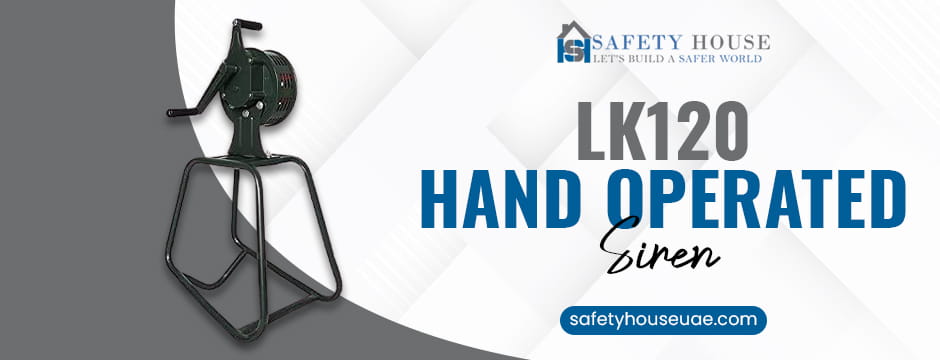
Do not select a LK120 hand operated siren based solely on a manufacturer’s general range claim. Look at your actual site.
Consider:
- Total area that needs to receive the warning
- Number of buildings
- Distance between work areas
- Walls and other physical barriers
- Open versus enclosed spaces
- Existing background noise
For a large facility, strategically positioned sirens may provide better coverage than relying on a single device.
Look for Strong and Durable Construction
A safety device needs to remain dependable even after repeated use. The construction material should therefore be considered carefully. Look for a siren made with durable materials and a well-built housing. The operating handle, internal mechanism, mounting components, and body should feel robust rather than fragile.
If the siren will be used outdoors or in challenging environments, environmental exposure becomes even more important. Dust, humidity, heat, moisture, and corrosive conditions can gradually affect equipment. This consideration is particularly relevant in regions with demanding climates. Safety equipment suppliers also recommend assessing environmental factors such as heat, humidity, dust, chemicals, and noise when selecting safety products.
Check the Operating Mechanism
A Safetrax hand operated siren should be easy to operate when an alert is necessary.
The handle or crank should move smoothly without excessive resistance. The mechanism should also be designed for repeated operation without becoming unreliable.
Before buying, examine:
- Handle design
- Crank movement
- Mechanical smoothness
- Overall construction
- Ease of operation
- Stability during use
A complicated or poorly designed mechanism can make the device difficult to operate during stressful situations.
Consider Portability
One major advantage of a hand-operated siren is its independence from electrical power. Portability can add another layer of usefulness. If the siren needs to be carried between different locations, choose a model that is practical for the people responsible for operating it.
Think about the weight, handle placement, dimensions, and ease of carrying. A siren used as a mobile emergency warning device should be manageable enough for quick deployment. For fixed applications, portability may be less important. In that case, greater emphasis can be placed on mounting options and stability.
Check Compliance and Product Standards
Safety equipment should not be selected purely on appearance or price. Relevant standards and certifications can provide an important indication that a product has been designed and tested against defined requirements. For hand-operated sirens, IS 6026 provides specifications covering areas such as materials, construction, workmanship, performance, testing, and marking.
When purchasing, ask the supplier for applicable certification and product documentation. This can help you confirm whether the model is appropriate for your application and any requirements associated with your organisation or project.
Think About Maintenance Requirements
A mechanically operated siren may be simple, but it still requires attention. Regular inspection can help identify problems before an emergency occurs. Check whether the operating mechanism moves freely and whether the housing, handle, and other components remain in good condition.
Periodic testing is especially important for emergency equipment because a device that has remained unused for months may not perform as expected when suddenly required. Keep the siren clean and store it appropriately when it is not in use. If the device is exposed to dust, moisture, or corrosive conditions, inspections may need to be more frequent.
Compare Quality Instead of Price Alone
Safetrax hand operated siren price is naturally an important purchasing consideration, but it should not be the only one. A low-priced product may not provide the durability, performance, or reliability required for an emergency warning device. On the other hand, choosing the most expensive model without considering your actual application may result in unnecessary spending.
Instead, compare products based on:
- Construction quality
- Sound performance
- Operating mechanism
- Materials
- Applicable standards
- Intended environment
- Portability
- Maintenance requirements
- Supplier support
A product that matches your actual requirements is generally a better choice than simply selecting the cheapest or loudest option.
Choose a Reliable Supplier
The supplier you purchase from can be just as important as the product itself. A reliable supplier should be able to explain the product’s specifications, intended applications, operating requirements, and relevant documentation. They should also help you determine whether one siren is sufficient or whether your site requires multiple warning points.
For organisations purchasing safety equipment in larger quantities, supplier support can also simplify future replacements, maintenance, and procurement. A knowledgeable supplier can help you avoid selecting a product that looks suitable on paper but does not match your site’s practical requirements.
Common Mistakes to Avoid
One of the most common mistakes is choosing a siren based only on its advertised loudness. Sound must be considered alongside the environment and required coverage. Another mistake is ignoring the operating mechanism. If the handle is difficult to turn or uncomfortable to use, the device may not perform effectively when needed.
Buyers may also overlook environmental conditions. A product used outdoors in heat, humidity, dust, or coastal conditions needs appropriate construction and care. Finally, avoid purchasing safety equipment without checking documentation and supplier credibility. Product quality, certification, and after-sales support can all contribute to long-term reliability.
Bottom Line
Choosing the right hand operated siren starts with understanding where and how it will be used. Sound output, coverage, construction, portability, operating mechanism, environmental conditions, standards, and maintenance should all be evaluated before making a decision. Since a siren may be required during an emergency, reliability should always take priority over appearance or price alone.
For organisations in the UAE looking for a suitable solution, Safety House General Trading LLC offers a dedicated hand-operated siren option as part of its safety equipment range. Selecting the right product with appropriate guidance can help ensure that your warning system remains ready when it matters most.